课程笔记
第1章 Fundamentals of Packaging
封装的定义、功能、分类、技术演进和 Moore’s Law for packaging。
考试要会什么
本章对应 Lecture 1,是整门课的语言基础。考试常问:
- What is microelectronics / microsystems packaging?
- Why is packaging important?
- Trace the development of packaging technology waves.
- Explain Moore’s Law for packaging / interconnection.
- What are the main functions of a package?
一句话记忆
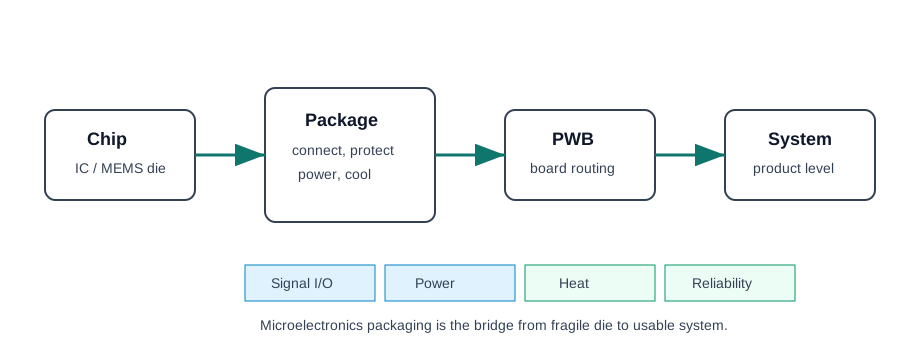
Packaging 是 chip 和 system 之间的桥:把 fragile die 连接、供电、散热、保护并集成到产品里。
核心原理
Microelectronics packaging 的对象不是单一“外壳”,而是一个从 die 到 system 的层级:
| 层级 | 作用 | 典型问题 |
|---|---|---|
| Chip / die | 产生功能 | fragile、I/O pad、heat generation |
| Package | 连接芯片和外部世界 | interconnect、thermal path、protection |
| PWB / substrate | 板级互连 | routing、power distribution、CTE mismatch |
| System | 最终产品 | cost、reliability、size、performance |
Packaging 的定义可写成: Packaging is the technology that interconnects, powers, cools, protects and mechanically supports ICs or microsystem devices so that they can operate reliably at board and system level.
必背功能
| 功能 | 解释 | 考试关键词 |
|---|---|---|
| Signal distribution | 把 chip signal 连接到其他 chip / board / system | I/O, interconnect, delay |
| Power distribution | 提供 supply 和 ground path | voltage drop, inductive noise |
| Heat dissipation | 把 chip heat 传到 ambient | thermal path, heat sink, TIM |
| Mechanical support | 支撑 fragile die 和 interconnect | substrate, package body |
| Environmental protection | 防 moisture、contamination、shock | encapsulation, hermetic sealing |
| Reliability and cost | 在性能、寿命、成本间折中 | yield, MTBF, manufacturability |
Technology Waves
| Wave | 代表技术 | 优势 | 主要 drawback |
|---|---|---|---|
| Through-hole | DIP, pin packages | simple, robust, easy assembly | large size, low I/O density, poor high-frequency performance |
| SMT | QFP, SOP, LCC | smaller footprint, higher board density | peripheral leads limit I/O pitch |
| Area-array | BGA, CSP, flip-chip | higher I/O, shorter path, better performance | warpage, solder fatigue, inspection difficult |
| Advanced 3D / heterogeneous | SiP, FOWLP, interposer, TSV, chiplets | high integration, small form, mix technologies | thermal, reliability, yield, cost challenge |
Moore’s Law for Packaging
IC scaling pushes more transistors into smaller die. Packaging must follow by increasing I/O density, reducing interconnect length, improving heat removal and lowering cost. 这就是 packaging version of Moore’s Law:不是简单让封装变小,而是让 interconnection and integration density 跟上芯片性能。
高频答法:As ICs scale, package interconnects become the performance bottleneck. Packaging must provide more I/O, shorter signal paths, better power distribution and better thermal management at lower cost.
题型模板
题型:Explain why packaging is multidisciplinary
- Electrical:signal and power distribution。
- Mechanical:support, shock/vibration resistance, assembly stress。
- Thermal:remove heat and control junction/device temperature。
- Materials:select compatible dielectric, metal, solder, underfill, substrate with suitable CTE and conductivity。
- Reliability:avoid delamination, corrosion, fatigue and moisture failure。
易错点
- 不要把 package 只写成 “protective case”。保护只是功能之一。
- Trace development 题一定要写每一代的 drawback,否则像流水账。
- Moore’s Law for packaging 不是背 IC transistor count,而是讲 I/O、interconnect、integration、cost 的压力。
本章概览
Lecture 1 的作用是建立“封装到底是什么”的框架。考试不会只问漂亮定义,而是要求你能解释:为什么随着芯片集成度提高,封装从一个附属工艺变成系统性能、成本和可靠性的核心瓶颈。
零基础先览
- Bare die 不能直接变成产品:它太脆弱、I/O pad 太小、无法直接承受环境和机械冲击。
- Package 是 bridge:把 die 的微小电连接转成 board/system 可用的连接。
- Package 是 compromise:电性能、散热、机械强度、材料兼容性、成本、制造良率同时被考虑。
- Technology waves 的本质:每一代封装都在解决上一代的 I/O density、size、speed、thermal 或 cost 限制。
Package functions 深入理解
Signal distribution
Signal distribution 不是简单“接线”。当 frequency 增加、edge rate 变快时,package interconnect 的长度、形状和材料都会影响 signal delay、reflection 和 crosstalk。因此 package electrical design 会成为 high-speed system 的性能限制。
Power distribution
Power path 要把 supply current 稳定送到 chip。随着 current density 上升,power distribution network 的 resistance 和 inductance 会导致 voltage drop、ground bounce 和 switching noise。
Heat dissipation
芯片工作时的 electrical power 最终变成 heat。Package 必须提供从 die → attach/TIM → substrate/heat spreader/heat sink → ambient 的热路径。热路径不好会让 device temperature 上升,进而影响 performance 和 lifetime。
Mechanical and environmental protection
Package 保护 die 免受 moisture、contamination、shock、vibration 和 handling damage。但对 MEMS 这类器件,封装还要允许它和环境交互,所以保护和访问环境之间存在矛盾。
Technology Waves 标准答案
Wave 1:Through-hole / DIP
代表:DIP、pin-through-hole package。优点是结构简单、装配直观、可靠性较好。缺点是 package size 大、board area 大、I/O density 低,高频下 lead parasitics 明显。
Wave 2:SMT
代表:SOP、QFP、LCC。优点是元件贴在 PCB 表面,不需要 through holes,减小体积并提高 board density。缺点是 peripheral leads 限制了 I/O pitch,lead deformation 和 solder joint reliability 仍是问题。
Wave 3:Area-array / BGA / CSP / Flip-chip
代表:BGA、CSP、flip-chip。优点是把 I/O 从边缘扩展到底部面积阵列,提高 I/O density,缩短 interconnect,改善 electrical performance。缺点是 inspection 难、warpage 和 solder fatigue 重要,rework 更复杂。
Wave 4:2.5D / 3D / SiP / FOWLP / Chiplets
代表:interposer、TSV、3D stacking、SiP、fan-out WLP。优点是 heterogeneous integration、更短互连、更高 bandwidth、更小 form factor。缺点是 thermal management、yield、cost、CTE/stress 和 process complexity。
完整答题模板:Trace technology waves
Microelectronics packaging evolved through several technology waves to meet increasing requirements for miniaturization, I/O density, speed and reliability. The first wave was through-hole packaging such as DIP, which was simple and robust but large and low in I/O density. The second wave was SMT, which mounted components directly on the PCB surface and reduced size, but peripheral leads still limited I/O. The third wave introduced area-array packages such as BGA, CSP and flip-chip, improving I/O density and electrical performance through shorter interconnects, but creating solder reliability and inspection challenges. The current wave moves toward SiP, WLP, 2.5D/3D integration and chiplets, enabling heterogeneous integration but bringing thermal, yield and cost challenges.
Future development 答题点
| Trend | Why it appears | Challenge |
|---|---|---|
| 3D integration / TSV | shorter interconnect, higher density | heat removal, stress, yield |
| Chiplets / SiP | mix different process nodes and functions | package-level design complexity |
| Fan-out WLP | more I/O and small form factor | warpage, fine-pitch routing |
| Advanced thermal materials | high power density | material cost and compatibility |
| Flexible / biomedical packaging | wearable and implantable devices | reliability, biocompatibility |
Self-check
- 我是否写出了封装的 5-6 个功能,而不只是 protection?
- Technology waves 是否每一代都有 feature + drawback?
- Future trends 是否写了 challenge,而不是只写技术名?
- 是否说明 packaging 和 system performance / reliability / cost 的关系?
Reference
- Lecture 1: function and classification of packages, development trends, assembly intro。
- Practice questions: technology waves, future development, multidisciplinary packaging。
来源说明
Slides-backed: Lecture 1。Slides + Exam-backed: practice questions 中 technology waves、multidisciplinary packaging 和 future trends。