课程笔记
第9章 Advanced Packaging Technology
Wire bonding、TAB、flip-chip、BGA、CSP、WLP 与 2D/3D 封装演进。
考试要会什么
本章对应 Additional Lecture 9,并和 Lecture 3/8 重叠。重点是各种 interconnect / package technology 的比较。
一句话记忆
Advanced packaging 的方向是:更短互连、更高 I/O、更小尺寸、更高集成,但代价是工艺、热和可靠性更难。
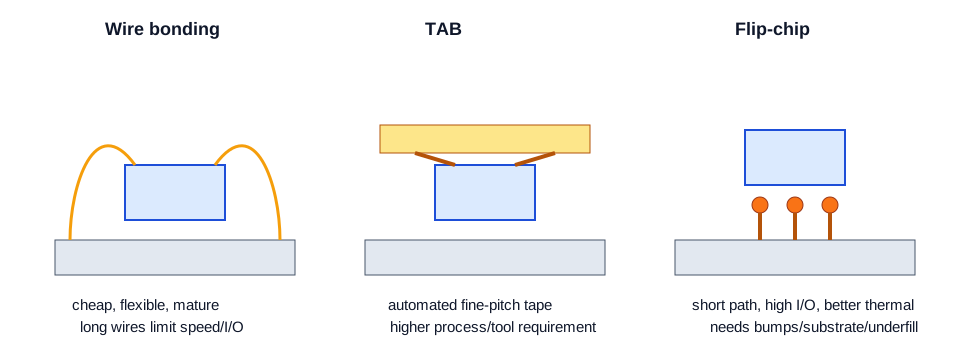
Wire bonding
优点:
- low cost and mature infrastructure;
- flexible for design changes and repair;
- equipment and process widely available;
- reliable for many low- to mid-I/O packages。
缺点:
- point-to-point process is slower;
- long wires add inductance/capacitance and degrade high-speed performance;
- peripheral pads limit I/O density;
- wire sweep and bond failure can occur during molding。
TAB
Tape automated bonding uses patterned metal leads on flexible polymer tape. 它适合 finer pitch 和自动化生产,但需要专门 tape/process,灵活性不如 wire bonding。
Flip-chip
Flip-chip turns the die face-down and connects it to substrate using solder bumps.
优点:
- shorter interconnect and better high-frequency performance;
- area-array I/O enables higher pin count;
- better thermal path from backside;
- all bumps can be joined simultaneously。
挑战:
- bumping and substrate cost;
- alignment/reflow process control;
- underfill needed for reliability;
- solder fatigue and inspection difficulty。
BGA / CSP / WLP / 3D
| 技术 | 核心特征 | 主要优势 | 主要挑战 |
|---|---|---|---|
| BGA | solder balls under package | high I/O, compact, good assembly yield | inspection, warpage, solder reliability |
| CSP | package close to chip size | small footprint | limited heat/I/O depending on design |
| WLP | package at wafer level | cost/time, small form factor | fine pitch, board routing, fatigue |
| 3D / TSV | vertical stacking | high density, short interconnect | thermal, yield, process complexity |
| FOWLP | fan-out redistribution beyond die | more I/O than fan-in WLP | warpage, process complexity |
题型模板
题型:Discuss wire bonding advantages and disadvantages
先写一句定义,然后从 cost、equipment、reliability、electrical performance、I/O density 五个维度展开。最后总结:wire bonding is mature and low-cost, but becomes less suitable for very high-density and high-speed packages.
题型:Why did packaging move from 2D to 3D?
- 2D footprint and interconnect length limit integration and speed。
- 3D stacking increases density and shortens connections。
- TSV/interposer/chiplets enable heterogeneous integration。
- Main challenges are heat removal, yield, reliability and cost。
易错点
- Wire bonding 缺点里一定要写 electrical performance 或 I/O limitation。
- Flip-chip 的优势不只是“小”,还包括 short interconnect 和 area-array I/O。
- 3D packaging 不能只写“堆叠”,还要写 thermal/yield challenge。
本章概览
Additional Lecture 9 把很多封装技术放在一起:wire bonding、TAB、flip-chip、BGA、CSP、WLP、2D/3D packaging。考试最可能不是让你背全部工艺步骤,而是让你比较它们为什么出现、解决什么问题、又带来什么挑战。
零基础先览
- Wire bonding:便宜成熟,但 wire 长、I/O 受限。
- TAB:用 metallized flexible tape 做自动化 fine-pitch interconnect。
- Flip-chip:用 bump 直接连接 die 和 substrate,短互连、高 I/O。
- BGA:底部 solder balls,area-array I/O。
- CSP/WLP:尺寸和流程更接近 chip/wafer level。
- 3D packaging:垂直堆叠提高密度,但热和测试更难。
Chip connection methods
Wire bonding
Wire bonding 是 point-to-point interconnection。它的最大优势是成熟、低成本、灵活、设备普及。缺点也来自 point-to-point 和 long wire:速度慢、寄生参数大、I/O pitch 受限、overmolding 时可能 wire sweep。
TAB
TAB uses etched copper leads on polymer tape. 它适合 fine-pitch 和自动化,但需要 tape design 和 specialized bonding process,灵活性和通用性不如 wire bonding。
Flip-chip
Flip-chip 把 die 翻转,active side 朝向 substrate,通过 solder bumps 连接。它消除了长 wire,实现 area-array I/O,降低 resistance/inductance/capacitance,改善高速性能和热路径。但它需要 bumping、精密 alignment、reflow、underfill 和更复杂的 substrate。
Complete comparison answer
Wire bonding is a mature and low-cost chip-to-package interconnection technology. It is flexible and supported by a large manufacturing infrastructure, but each wire is bonded point by point, so the process is slower and the long wires introduce parasitic inductance and capacitance. TAB improves automation and fine-pitch capability by using patterned copper leads on flexible polymer tape, but it needs special tape and bonding equipment. Flip-chip uses solder bumps to connect the die directly to the substrate, giving shorter interconnects, higher I/O density and better electrical/thermal performance, but it requires wafer bumping, precise alignment, underfill and more expensive substrates.
BGA / CSP / WLP 关系
BGA 和 CSP 更多描述 package structure / size;WLP 描述 fabrication stage。BGA 可用于高 I/O;CSP 强调 package footprint 接近 die;WLP 强调 wafer-level process。
2D 到 3D 的动因
传统 2D packaging 的限制:
- footprint grows with number of dies;
- interconnect length increases;
- signal delay and power increase;
- I/O density reaches board/package limits。
3D packaging 的优势:
- vertical integration saves area;
- shorter interconnect improves bandwidth/power;
- heterogeneous dies can be stacked/integrated;
- chiplets can improve yield and design flexibility。
3D packaging 的挑战:
- heat trapped inside stack;
- TSV/interposer process cost;
- test and known-good-die issue;
- stress and warpage;
- yield loss from multi-die assembly。
题型:Estimate WLP cost/time saving
如果题目给 wafer size、die size、I/O count,但没有明确成本模型,通常不是要求精确商业报价,而是让你说明逻辑:
- WLP processes all dies in parallel on wafer。
- It avoids individual wire bonding for each I/O。
- Higher throughput reduces time per die。
- Smaller form factor reduces material and handling。
- But fine-pitch reliability and board routing may offset part of savings。
Self-check
- 比较题是否至少覆盖 cost、equipment、reliability、electrical performance?
- Flip-chip 是否写 underfill 和 solder fatigue?
- 3D packaging 是否写 thermal/yield/test challenge?
- WLP 是否写 wafer-level process,而不是只写小尺寸?
Reference
- Additional Lecture 9: chip connection, BGA/CSP/WLP, 2D/3D packaging。
- Lecture 3: assembly methods and failure modes。
- Practice questions: wire bonding/TAB/flip-chip comparison, WLP cost/time saving。
来源说明
Slides-backed: Additional Lecture 9, Lecture 3, Lecture 8。Slides + Exam-backed: practice questions 中 wire bonding/TAB/flip-chip 与 WLP 反复出现。